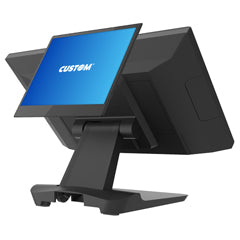

AI kitchen display systems and smart order routing help restaurants manage orders more efficiently across dine-in, takeout, delivery, drive-thru, online ordering, phone orders, and third-party channels. Instead of relying only on paper tickets or staff manually sorting orders, a modern kitchen display workflow can route orders to the right prep station, organize timing, reduce missed tickets, support order visibility, and help kitchen teams keep service moving during peak periods.
For restaurant operators, AI kitchen display technology is not just a screen in the back of house. It connects to the full restaurant technology stack, including restaurant POS hardware, receipt printers, kitchen printers, sticky printers, sticky printer media, cloud-ready printers, cash drawers, barcode scanners, kitchen displays, customer-facing displays, online ordering systems, and network hardware.
Spartan POS helps restaurants, QSRs, cafes, bakeries, delis, bars, ghost kitchens, food trucks, and multi-location operators compare restaurant POS hardware used around modern order routing. Whether your restaurant uses paper tickets, digital kitchen screens, sticky pickup labels, cloud receipt printing, or a hybrid workflow, the right hardware setup helps orders move from customer to kitchen to pickup more reliably.
Quick Answer
AI kitchen display systems and smart order routing are best for restaurants that need to manage orders from multiple channels, reduce missed tickets, improve kitchen timing, support prep-station routing, and keep dine-in, takeout, delivery, pickup, drive-thru, and online orders organized.
A kitchen display system may reduce reliance on paper tickets, but many restaurants still need kitchen printers, receipt printers, sticky printers, and cloud-ready printers as part of the full workflow. The best setup depends on your POS software, kitchen layout, order volume, prep stations, online ordering channels, and staff process.
Compatibility depends on your POS software, operating system, connection type, drivers, accessories, and configuration. Confirm compatibility before ordering.
What Is a Kitchen Display System?
A kitchen display system, often called a KDS, is a digital screen-based order management system used in restaurant kitchens and prep areas. Instead of printing every order only as a paper ticket, the order appears on a display where staff can view, prepare, update, bump, route, or complete the ticket.
A KDS can be used at the grill station, fryer station, bar, expo station, pickup counter, drive-thru area, delivery station, or prep line. Some restaurants use a KDS as the primary kitchen workflow. Others use kitchen printers and sticky printers alongside the KDS for backup, item labels, prep labels, pickup labels, or station-specific printed tickets.
What Makes a KDS “Smart” or AI-Assisted?
A smart or AI-assisted kitchen display workflow can go beyond simply showing tickets in the order received. Depending on the software platform, it may help assign items to the right station, organize timing, prioritize orders, flag bottlenecks, route items by category, track prep performance, consolidate online orders, and help managers understand kitchen flow.
The AI value usually comes from the software and routing logic, not from the screen alone. The hardware still matters because orders need to be captured, displayed, printed, labeled, routed, and completed reliably. That is why restaurants should plan KDS screens together with POS terminals, printers, sticky labels, kitchen stations, and network connectivity.
Where Smart Order Routing Fits in a Restaurant
| Restaurant Area | How Smart Routing Helps | Related Hardware |
|---|---|---|
| Front counter | Routes counter orders directly to the right kitchen or prep station. | Restaurant POS hardware |
| Kitchen line | Displays or prints orders by station, course, item type, or production priority. | Kitchen printers |
| Expo station | Helps staff coordinate completed items, check accuracy, and manage order handoff. | Receipt printers |
| Pickup counter | Organizes takeout, delivery, and pickup orders with customer names, order numbers, and ready times. | Sticky printers |
| Online ordering | Routes web, app, and third-party orders into the same kitchen workflow as in-store orders. | Cloud receipt printing |
| Drive-thru | Helps route drive-thru orders to prep, drink, grill, fryer, and pickup stations quickly. | AI voice ordering hardware planning |
Why Restaurants Are Moving Toward Smart Kitchen Routing
Restaurant kitchens now receive orders from more places than ever. A single kitchen may need to process dine-in tickets, counter orders, drive-thru orders, online orders, delivery marketplace orders, phone orders, kiosk orders, and catering orders at the same time. Without a clear routing system, tickets can pile up, orders can be missed, and staff may waste time sorting paper instead of preparing food.
Smart kitchen routing helps by sending the right order information to the right place. Drinks can go to the bar, fried items to the fryer station, sandwiches to the prep line, pickup orders to expo, and sticky labels to the bagging or drink station. The right setup reduces confusion and helps the kitchen stay organized during rush periods.
KDS vs Kitchen Printer vs Sticky Printer
| Hardware Type | Best For | When to Use It |
|---|---|---|
| Kitchen Display System | Digital order visibility, prep timing, station routing, order status, and kitchen management. | Use when the kitchen needs screen-based ticket management, order prioritization, and reduced paper clutter. |
| Kitchen Printer | Paper kitchen tickets, hot kitchen environments, station-specific tickets, and backup workflows. | Use when staff need printed tickets or when paper is still the most reliable workflow for the prep station. |
| Sticky Printer | Pickup labels, bag labels, drink labels, delivery labels, food labels, and item-level customer identification. | Use when orders need adhesive labels for bags, cups, containers, shelves, or prepared items. |
| Receipt Printer | Customer receipts, counter receipts, order confirmations, payment receipts, and checkout workflows. | Use at the front counter, drive-thru, payment station, or pickup counter where a customer receipt is needed. |
AI Kitchen Display Systems and Online Ordering
Online ordering makes kitchen routing more important. Orders may arrive from a restaurant website, mobile app, third-party delivery platform, cloud POS, kiosk, or phone ordering system. A smart KDS workflow can help bring those orders into one kitchen process so staff are not constantly checking multiple tablets, screens, or printers.
For online ordering, the hardware plan may include a KDS screen, a kitchen printer, a sticky printer for pickup labels, a receipt printer for customer receipts, and a cloud-ready printer for remote order printing. Review Cloud Receipt Printing for Online Ordering and Cloud POS, Star CloudPRNT Next, and Star CloudPRNT printers and interface boards when planning cloud-connected order routing.
AI Kitchen Display Systems and Sticky Labels
As restaurants receive more takeout, pickup, delivery, and drive-thru orders, sticky labels become more important. A KDS can help manage the kitchen flow, while sticky printers help organize the physical order after it leaves the screen.
Use sticky labels for customer names, order numbers, drink labels, bag labels, pickup shelf labels, delivery labels, modifiers, prep instructions, and item-level identification. For restaurants with high pickup or delivery volume, a KDS plus sticky printers can be a stronger workflow than either one alone.
For more guidance, review Restaurant Pickup Order Label Printing, Sticky Printer vs Label Printer vs Receipt Printer, and Kitchen Printer vs Sticky Printer vs Label Printer.
AI Kitchen Display Systems and AI Voice Ordering
AI voice ordering can capture orders from drive-thru lanes, phone calls, kiosks, or other voice channels, but those orders still need to reach the kitchen clearly. A smart KDS can help route AI-captured orders into the same production workflow as counter, online, and dine-in orders.
For example, an AI drive-thru order may need to send sandwich items to one station, drinks to another, fries to another, and the full order to expo. That workflow may also require sticky labels, printed backup tickets, receipt printing, and customer confirmation. For related planning, review AI Voice Ordering for Restaurants, Drive-Thru and POS Systems.
Restaurant Hardware Needed Around a Smart KDS
| Hardware Category | Why It Matters | Shop or Learn More |
|---|---|---|
| Restaurant POS hardware | The POS captures orders, payments, menu items, modifiers, routing rules, and reporting. | Shop Restaurant POS Hardware |
| Kitchen printers | Still useful for paper tickets, backup workflows, station tickets, and hot kitchen environments. | Shop Kitchen Printers |
| Receipt printers | Used for customer receipts, payment receipts, counter tickets, and order confirmations. | Shop Receipt Printers |
| Sticky printers | Used for order labels, drink labels, pickup labels, bag labels, and delivery labels. | Shop Sticky Printers |
| Sticky printer media | Needed for compatible linerless or adhesive order label workflows. | Shop Sticky Printer Media |
| Cloud-ready printers | Useful for online ordering, cloud POS, remote printer routing, and multi-location order workflows. | Shop Star CloudPRNT Printers |
| Cash drawers | Still needed when the restaurant accepts cash at the counter, drive-thru, or payment station. | Shop Cash Drawers |
| Barcode scanners | Useful for retail foodservice, loyalty cards, inventory, prepared foods, packaged items, and back-office operations. | Shop Barcode Scanners |
Best Restaurant Types for Smart Kitchen Routing
Quick-Service Restaurants
QSRs can use smart kitchen routing to manage counter orders, drive-thru orders, mobile orders, delivery orders, and pickup orders during rush periods. A KDS can help organize production, while sticky printers and kitchen printers help label and back up order flow.
Cafes and Coffee Shops
Cafes often need drink labels, food labels, mobile order routing, pickup shelf organization, and clear customer-name identification. A smart KDS can help manage the kitchen or bar workflow, while sticky printers help organize cups, bags, and pickup orders.
Pizza and Takeout Restaurants
Pizza shops and takeout-heavy restaurants need strong order timing, phone order handling, online order routing, make-line visibility, and pickup coordination. A KDS can help organize production, while receipt printers and sticky labels support customer handoff.
Ghost Kitchens and Delivery-First Restaurants
Ghost kitchens often receive orders from many digital channels. A smart KDS helps organize those incoming orders, while kitchen printers, sticky printers, and cloud-ready printers support prep, labeling, expo, and delivery handoff.
Multi-Location Restaurant Groups
Multi-location restaurants benefit from standardized printer models, KDS workflows, routing rules, receipt paper, sticky media, support procedures, and replacement hardware plans. Standardization makes training, troubleshooting, and scaling easier.
When a Kitchen Printer May Still Be Better Than a KDS
A KDS is not always the right first step. Some kitchens still work best with printed tickets, especially in hot, crowded, wet, or high-stress environments where staff are used to grabbing, marking, clipping, or moving tickets physically. Impact kitchen printers can be especially useful in certain hot kitchen environments where thermal paper may not be ideal.
Many restaurants use both: a KDS for visibility and kitchen management, and kitchen printers for station tickets or backup. If your kitchen relies on paper tickets today, review kitchen printers, receipt printers, Best POS Printers for Restaurants, and Kitchen Printer vs Sticky Printer vs Label Printer.
What to Confirm Before Adding a KDS or Smart Routing Workflow
- POS compatibility: Confirm that your POS software supports the KDS, printers, routing rules, and order channels you want to use.
- Order channels: List every source of orders, including counter, table service, drive-thru, online ordering, phone orders, delivery apps, kiosks, and catering.
- Kitchen stations: Decide whether orders need to route to grill, fryer, bar, prep, pizza, expo, pickup, delivery, or multiple stations.
- Printer requirements: Confirm whether you still need kitchen printers, receipt printers, sticky printers, backup printers, or cloud-ready printers.
- Sticky label needs: Confirm whether cups, bags, containers, shelves, or pickup orders need adhesive labels.
- Network reliability: KDS screens, cloud orders, printers, POS terminals, and online ordering systems depend on stable connectivity.
- Staff workflow: Define who bumps orders, who handles exceptions, who prints labels, who checks accuracy, and who controls pickup handoff.
- Kitchen environment: Consider heat, moisture, grease, space, mounting, cable routing, visibility, and staff access before placing screens or printers.
- Backup plan: Decide what happens if the KDS, network, POS, or online ordering system goes down.
Compatibility depends on your POS software, operating system, connection type, drivers, accessories, and configuration. Confirm compatibility before ordering.
Common KDS and Smart Routing Mistakes
| Mistake | Why It Causes Problems | Better Approach |
|---|---|---|
| Replacing every printer too quickly | Some kitchens still need paper tickets, labels, receipts, or backup printers. | Use KDS screens and printers together when the workflow needs both visibility and physical labels or tickets. |
| Ignoring pickup labeling | Orders may be visible on screen but still get mixed up at the pickup shelf or delivery handoff. | Add sticky labels for customer names, order numbers, bags, drinks, and containers. |
| Routing every order to every station | Too much information on every screen can slow down staff and create confusion. | Route only the relevant items to each station and keep expo visibility clear. |
| Forgetting online order timing | Digital orders may need different prep timing, promise times, or pickup workflows than in-store orders. | Plan online, delivery, pickup, and dine-in workflows separately before combining them. |
| Not planning network and power | Unstable connectivity can stop orders from reaching screens or printers. | Review network coverage, Ethernet options, Wi-Fi stability, power placement, and backup workflows. |
Related Products and Guides
- Shop Restaurant POS Hardware
- Shop Kitchen Printers
- Shop Receipt Printers
- Shop Sticky Printers
- Shop Sticky Printer Media
- Shop Star CloudPRNT Printers and Interface Boards
- Shop Cash Drawers
- Shop Receipt Paper
- Cloud Receipt Printing for Online Ordering and Cloud POS
- Star CloudPRNT Next
- AI Voice Ordering for Restaurants, Drive-Thru and POS Systems
- Restaurant Online Ordering Hardware
- Restaurant Pickup Order Label Printing
- Best POS Printers for Restaurants
- Sticky Printer vs Label Printer vs Receipt Printer
- Kitchen Printer vs Sticky Printer vs Label Printer
- Contact a POS Hardware Expert
Frequently Asked Questions
What is an AI kitchen display system?
An AI kitchen display system is a digital restaurant order management workflow that may use software logic, automation, routing rules, timing tools, station assignment, and performance data to help kitchens manage orders more efficiently. The AI or smart-routing features depend on the software platform.
Does a KDS replace kitchen printers?
Sometimes, but not always. Some restaurants use a KDS instead of paper tickets. Others use a KDS with kitchen printers, receipt printers, sticky printers, or backup printers. The right setup depends on the kitchen layout, staff workflow, POS software, and order volume.
What is smart order routing?
Smart order routing sends each order or item to the correct kitchen station, prep area, printer, display, or pickup workflow. For example, drinks may route to the bar, hot food to the kitchen line, and pickup labels to a sticky printer.
Is a KDS useful for online ordering?
Yes. A KDS can help restaurants organize online orders, delivery orders, pickup orders, and in-store orders in one kitchen workflow. Restaurants may also need cloud printers, sticky printers, kitchen printers, or receipt printers to support the full process.
Do restaurants still need sticky printers with a KDS?
Many do. A KDS helps manage digital order flow, but sticky labels help organize physical items such as cups, bags, containers, pickup shelves, and delivery orders. Sticky printers are especially useful for takeout, delivery, cafes, QSRs, and drive-thru workflows.
What hardware is needed for smart kitchen routing?
Hardware may include restaurant POS terminals, kitchen displays, kitchen printers, receipt printers, sticky printers, cloud-ready printers, cash drawers, customer displays, network equipment, and compatible printer media.
Can AI voice ordering connect to a KDS?
Yes, when the AI ordering provider, POS system, and KDS support the workflow. AI-captured orders may need to route to kitchen screens, printers, sticky labels, expo stations, or pickup areas.
Can Spartan POS help with restaurant order routing hardware?
Yes. Spartan POS can help compare receipt printers, kitchen printers, sticky printers, CloudPRNT-compatible printers, sticky printer media, cash drawers, barcode scanners, and restaurant POS hardware used around smart kitchen routing and modern restaurant workflows.
Bottom Line
AI kitchen display systems and smart order routing are important because restaurant orders now come from more channels than ever. A strong routing workflow helps kitchens manage dine-in, takeout, delivery, online, phone, drive-thru, and pickup orders without relying only on manual sorting or paper ticket piles.
For the hardware side of smart restaurant routing, start with restaurant POS hardware, kitchen printers, receipt printers, sticky printers, Star CloudPRNT printers, and Spartan POS hardware support to build a reliable order capture, routing, printing, labeling, and pickup workflow.