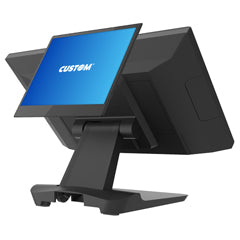

Cloud POS vs Local POS
Choosing between a cloud POS system and a local POS system is one of the most important technology decisions a retail store, restaurant, grocery store, liquor store, convenience store, or multi-location business can make. Cloud POS systems are typically managed through internet-based software, while local POS systems usually run on in-store computers, local servers, or store-controlled infrastructure. Both approaches can work well, but the right choice depends on how the business sells, how much control it needs, how reliable the internet is, what hardware it uses, how inventory is managed, and how important local access is during outages.
This guide compares cloud POS vs local POS systems for business owners evaluating checkout, inventory, reporting, payments, hardware compatibility, multi-store management, data control, support, and long-term ownership. It also explains where BizTracker Infinity POS, BizTracker Infinity Multi-Store, and BizTracker Infinity Technology fit for businesses that want a powerful retail management system with POS, inventory, barcode printing, reporting, multi-store options, and support.
Quick Answer
Choose a cloud POS system if you want easier remote access, browser or app-based management, simpler software updates, subscription-based pricing, and less local infrastructure to manage.
Choose a local POS system if you want more control over the in-store POS environment, stronger local operation, deeper control over hardware and database workflows, and a system designed around store-owned infrastructure.
Consider BizTracker Infinity POS if your business wants a retail point-of-sale and management system for small to mid-sized operators with inventory, barcode label printing, reporting, customer management, and multi-store expansion options.
Cloud POS vs Local POS: Main Difference
| Comparison Point | Cloud POS | Local POS |
|---|---|---|
| Where the system runs | Primarily through internet-based software, browser access, or cloud-hosted services | Primarily on local computers, in-store systems, or store-controlled infrastructure |
| Best for | Businesses that want remote access, simpler updates, and lower local IT management | Businesses that want more local control, stronger in-store operation, and more control over hardware and database setup |
| Internet dependence | Usually more dependent on internet access, though some systems offer limited offline mode | Usually better suited for businesses that want local operation even when internet reliability is a concern |
| Hardware flexibility | Can be limited to approved hardware, supported devices, or app-compatible peripherals | Can offer more control over POS terminals, printers, scanners, cash drawers, and local device configuration |
| Updates | Often handled automatically by the software provider | Often controlled through local installation, support, or planned upgrade processes |
| Ownership feel | More subscription and vendor-platform driven | More infrastructure and business-controlled |
| Multi-store management | Often designed for centralized access across locations | Can support multi-store workflows with the right database, synchronization, and headquarters setup |
What Is a Cloud POS System?
A cloud POS system is a point-of-sale system where much of the software, data access, reporting, and management happens through an internet-connected platform. Many cloud POS systems are accessed through a browser, tablet app, or provider-managed dashboard.
Cloud POS systems are popular because they can be easier to deploy, easier to update, and easier to access remotely. A business owner may be able to check reports, view sales, manage items, or update settings from outside the store depending on the software.
Cloud POS is often a strong fit for:
- New stores that want a faster setup
- Businesses that prefer subscription-based software
- Owners who want remote access to reporting
- Tablet POS environments
- Businesses with reliable internet
- Simple retail, restaurant, appointment, or mobile checkout workflows
- Businesses that do not want to manage local servers or local database infrastructure
What Is a Local POS System?
A local POS system is a point-of-sale system that primarily runs on computers, terminals, servers, or store-controlled infrastructure located at the business. Depending on the system, core selling, inventory, reporting, customer management, barcode printing, and database activity may be handled locally or through a business-managed network.
Local POS systems are often preferred by businesses that want more control over their operating environment, POS hardware, database, backups, reporting tools, peripheral devices, and store-specific configuration.
Local POS is often a strong fit for:
- Retail stores with complex inventory
- Multi-lane checkout environments
- Businesses that want stronger local operation
- Stores with unreliable internet
- Businesses with custom workflows
- Retailers that need barcode label printing and deeper item management
- Multi-store operators that want headquarters-level control
- Businesses that prefer Windows-based POS terminals and traditional POS hardware
Where BizTracker Infinity Fits
BizTracker Infinity POS is a retail point-of-sale and management system built for small to mid-sized operators that need more than a basic checkout app. It is a strong consideration for businesses that want POS, inventory, barcode label printing, reporting, customer management, payment workflows, and retail management features in a store-focused system.
BizTracker Infinity is especially relevant for businesses comparing cloud POS vs local POS because many retailers still need the control, flexibility, and operational depth that a local or store-managed POS environment can provide. Instead of choosing a lightweight cloud-only platform, a business may need a more complete retail management system with inventory tools, barcode label printing, reporting, multi-store options, and support.
| BizTracker Resource | Best For | Link |
|---|---|---|
| BizTracker Infinity POS | Single-store retail POS, inventory, barcode printing, checkout, reporting, and retail management | Learn about BizTracker Infinity POS |
| BizTracker Infinity Multi-Store | Retailers that need multi-store management, headquarters data access, store-level control, and SQL-based multi-store workflows | Learn about BizTracker Infinity Multi-Store |
| BizTracker Infinity Technology | Businesses evaluating the technology behind the system, reporting, database structure, integrations, and multi-store features | View BizTracker Infinity Technology |
| BizTracker Support & Training | Businesses that want support, training, and help with POS implementation and ongoing system use | View BizTracker Support & Training |
Cloud POS vs Local POS by Business Type
| Business Type | Cloud POS May Fit When | Local POS May Fit When |
|---|---|---|
| Single-location retail store | The store wants simple checkout, easy remote access, and minimal local IT | The store needs deeper inventory, barcode labels, local control, and more flexible hardware |
| Multi-store retail chain | The business wants centralized reporting through a provider-hosted platform | The business wants headquarters control, local store operation, and structured multi-store data management |
| Restaurant or cafe | The restaurant wants tablet ordering, online ordering integrations, and app-based management | The restaurant wants stronger local terminal control, kitchen printing, and store-managed infrastructure |
| Liquor store | The store has simple item management and wants a cloud subscription workflow | The store needs age-restricted product workflows, barcode labels, inventory control, receipt printers, cash drawers, and local reliability |
| Grocery or convenience store | The operation is simple and cloud-compatible hardware is enough | The store needs scales, scanners, printers, cash drawers, complex inventory, labels, and more hardware control |
| Warehouse-connected retailer | The business mainly needs cloud reporting and simple item lookup | The business needs barcode labels, scanners, receiving, mobile computers, and deeper inventory workflows |
When Cloud POS Is the Better Choice
A cloud POS system may be the better choice when a business wants simplicity, remote access, easier software updates, and less local infrastructure. Cloud POS systems can work well for businesses that do not need heavy customization, complex local databases, or deep hardware flexibility.
Cloud POS may be a better fit if you need:
- Remote access to sales and reports
- Subscription-based software
- Simple setup for one location
- Tablet-based checkout
- Automatic software updates
- Lower local IT management
- Basic inventory, product, employee, and customer management
- Provider-managed software hosting
When Local POS Is the Better Choice
A local POS system may be the better choice when the business wants more control over its checkout environment, hardware, database, backups, workflow, and in-store reliability. Local POS systems can also make sense for retailers that need deeper inventory management, barcode label printing, multi-lane checkout, local reporting, and hardware flexibility.
Local POS may be a better fit if you need:
- More control over POS hardware and peripherals
- Local operation for checkout and store workflows
- Retail inventory management beyond basic item lists
- Barcode label printing
- Multi-lane checkout
- Store-specific pricing, tax, clerk, and security controls
- Integration with business reporting tools
- More control over backups, upgrades, and system configuration
- A retail management system like BizTracker Infinity POS
Cloud POS vs Local POS for Hardware Compatibility
Hardware compatibility is one of the biggest differences between cloud POS and local POS systems. Cloud POS platforms may only support approved printers, scanners, cash drawers, scales, card readers, and tablet devices. Local POS systems may offer more control, but they still require the correct drivers, interfaces, operating system support, and software configuration.
| Hardware Type | Why It Matters | Helpful Spartan POS Link |
|---|---|---|
| Receipt printers | Checkout receipts, kitchen tickets, customer receipts, and payment workflows depend on printer compatibility | Receipt Printers |
| Barcode scanners | Product lookup, inventory, receiving, and checkout scanning require compatible barcode scanner setup | Barcode Scanners |
| Cash drawers | Cash drawer triggering often depends on printer, terminal, interface, and POS software support | Cash Drawers |
| Label printers | Barcode labels, product labels, shelf labels, and inventory labels require compatible label printers and media | Label Printers |
| Mobile computers | Inventory, receiving, warehouse, and stockroom workflows may require mobile devices beyond basic scanners | Mobile Computers |
| POS terminals and peripherals | Touchscreens, customer displays, printers, scanners, drawers, and payment devices must work together | POS Hardware |
Cloud POS vs Local POS for Inventory Management
Inventory management is where many businesses outgrow basic POS systems. A simple cloud POS may be enough for businesses with a small product catalog, but retailers with large inventories, multi-store stock movement, barcode labels, purchase orders, vendor management, and detailed reporting may need a more powerful retail management system.
BizTracker Infinity POS is worth considering for retailers that need a POS system tied to inventory management, barcode printing, customer records, reporting, and store operations. For multi-location retailers, BizTracker Infinity Multi-Store is relevant when multiple stores need shared data, headquarters-level control, and store-specific management.
| Inventory Need | Cloud POS Consideration | Local POS / BizTracker Consideration |
|---|---|---|
| Small product catalog | Cloud POS may be enough | Local POS can still work but may be more system than needed |
| Large SKU catalog | Confirm item limits, import tools, reporting, and variant handling | Retail management systems may provide stronger item and reporting control |
| Barcode label printing | Confirm label printer and label format support | BizTracker Infinity includes barcode label and shelf label workflows |
| Multi-store inventory | Confirm store-level inventory, transfers, and reporting | BizTracker Infinity Multi-Store is designed for multi-store retail management workflows |
| Receiving and stockroom workflows | Confirm scanner, mobile, and purchase order support | Local systems may support deeper receiving, scanning, and back-office workflows depending on setup |
Cloud POS vs Local POS for Multi-Store Retail
Multi-store businesses need to think beyond checkout. They need item management, pricing control, reporting, store-specific settings, inventory movement, clerk security, payment workflows, and centralized management. A cloud POS system can be attractive for remote visibility, but a local or distributed retail management system may be stronger when a business wants more control over how stores share and manage data.
BizTracker Infinity Multi-Store is designed for retailers that need multi-store management, store data access, headquarters control, store-specific pricing, and broader retail management capabilities. It can be a strong alternative to cloud-only POS systems for businesses that want multi-store visibility without giving up store-focused operational control.
Cloud POS vs Local POS for Reporting
Cloud POS reporting is usually convenient because managers can often access dashboards from outside the store. Local POS reporting can be powerful when the business wants more control over the database, custom reporting tools, local history, and store-specific reporting logic.
Businesses comparing reporting should ask:
- Can managers view reports remotely?
- Can reports be customized?
- Can the system report by store, department, clerk, item, vendor, category, or customer?
- Can data be exported?
- Can the business keep historical sales and inventory data?
- Can the system support multi-store reporting?
- Can the system support accounting or business reporting tools?
For businesses that care about deeper data analysis and database-driven reporting, review BizTracker Infinity Technology.
Cloud POS vs Local POS for Payments, PCI, and EMV
Payment processing is a major part of POS selection. Cloud POS systems often tie payment processing closely to the software provider or approved payment terminals. Local POS systems may offer different payment integration paths, but payment setup must be carefully planned for security, PCI requirements, EMV chip cards, and supported hardware.
Businesses evaluating BizTracker payment workflows can review BizTracker PCI Compliance and BizTracker EMV Chip Credit Cards for more payment-related information.
Before choosing any POS system, confirm:
- Supported payment processors
- Approved payment terminals
- PCI compliance responsibilities
- EMV chip card support
- Debit, credit, gift card, and store credit workflows
- Receipt printer and cash drawer integration
- Support responsibilities for payment troubleshooting
Cloud POS vs Local POS for Restaurants
Restaurants, bars, breweries, cafes, quick-service locations, and full-service restaurants need more than a simple checkout screen. They may need table service, kitchen printing, receipt printers, cash drawers, online ordering, order routing, modifiers, customer receipts, and reliable hardware.
A cloud POS system can be a good fit for restaurants that want tablet ordering, online ordering connections, and remote reporting. A local POS system may be a better fit when the restaurant wants more in-store control, stronger local terminal workflows, and a store-managed hardware setup.
Businesses evaluating BizTracker for foodservice workflows can review BizTracker Restaurant POS. For hardware planning, review Restaurant POS Hardware Guide, Restaurant Online Ordering Hardware Setup, and Best POS Printers for Restaurants.
Cloud POS Pros and Cons
| Cloud POS Pros | Cloud POS Cons |
|---|---|
| Remote access to reports and management tools | Usually more dependent on internet connection and provider platform availability |
| Provider-managed updates | Hardware choices may be limited to approved devices |
| Often faster to deploy for simple stores | Subscription cost can continue indefinitely |
| Less local server or database management | Advanced inventory, reporting, or custom workflows may be limited |
| Useful for mobile or tablet-based POS setups | Data access and exports depend on the software provider |
Local POS Pros and Cons
| Local POS Pros | Local POS Cons |
|---|---|
| More control over in-store operation and local infrastructure | May require more setup, support, and system maintenance |
| Can offer stronger hardware flexibility | Remote access may require additional configuration |
| Good fit for complex inventory and retail management workflows | Upgrades may be more planned and hands-on than cloud updates |
| Can be better for businesses that want local database and reporting control | Implementation may require more planning |
| May offer stronger continuity for in-store workflows when internet reliability is a concern | Backups, security, and local system health must be managed properly |
Hardware to Plan Before Choosing Cloud or Local POS
Do not choose POS software without planning the hardware. The system must support the physical devices used at the checkout counter, stockroom, receiving area, kitchen, office, and warehouse.
- POS hardware for checkout stations and front-counter setups
- Receipt printers for customer receipts, kitchen tickets, and payment workflows
- Receipt paper for compatible thermal and bond receipt printers
- Barcode scanners for product lookup, checkout, inventory, and receiving
- Cash drawers for cash management and checkout stations
- Label printers for product labels, shelf labels, and barcode labels
- Barcode labels for inventory, products, bins, and warehouse workflows
- Mobile computers for receiving, inventory, picking, and stockroom workflows
Common Buying Mistakes to Avoid
- Choosing cloud POS only because it sounds modern
- Choosing local POS only because it feels familiar
- Ignoring internet reliability at the store
- Not confirming hardware compatibility before buying printers, scanners, drawers, or terminals
- Assuming every cloud POS has strong offline mode
- Assuming every local POS is outdated
- Underestimating inventory, barcode label, and reporting needs
- Forgetting multi-store requirements until after the first location is live
- Not reviewing payment processing, PCI, and EMV requirements
- Buying POS hardware before confirming software, drivers, operating system, and connection type
Compatibility Guidance
Cloud POS and local POS compatibility depends on the software, operating system, payment processor, internet connection, local network, drivers, hardware model, firmware, accessories, and configuration.
Compatibility depends on your POS software, operating system, connection type, drivers, accessories, and configuration. Confirm compatibility before ordering.
Before choosing a POS system or POS hardware, confirm:
- Receipt printer compatibility
- Barcode scanner compatibility
- Cash drawer triggering method
- Label printer support
- Payment terminal support
- Operating system requirements
- Network and internet requirements
- Offline or local operation needs
- Multi-store requirements
- Support and training responsibilities
Recommended Buying Path
- List your business type, location count, inventory size, and checkout workflow.
- Decide whether remote access or local control matters more.
- Confirm internet reliability and offline operation needs.
- Identify required hardware, including receipt printers, barcode scanners, cash drawers, label printers, and payment terminals.
- Compare cloud POS platforms against local POS systems such as BizTracker Infinity POS.
- For multiple stores, review BizTracker Infinity Multi-Store and compare it against cloud multi-location systems.
- Confirm payment, PCI, EMV, inventory, reporting, and support requirements.
- Test the full workflow before replacing the live POS environment.
Related POS Software and Hardware Resources
- BizTracker Infinity POS
- BizTracker Infinity Multi-Store
- BizTracker Infinity Technology
- BizTracker Support & Training
- BizTracker Restaurant POS
- BizTracker PCI Compliance
- BizTracker EMV Chip Credit Cards
- Contact BizTracker
- POS Hardware
- Receipt Printers
- Barcode Scanners
- Cash Drawers
- Label Printers
- Mobile Computers
- POS Hardware Compatibility Guide
- POS Hardware Setup and Troubleshooting Center
- Contact a POS Hardware Expert
Why Work With Spartan POS?
Spartan POS helps businesses choose POS hardware, receipt printers, barcode scanners, cash drawers, label printers, mobile computers, payment-related hardware, and related peripherals for cloud POS and local POS environments. Spartan POS also helps customers think through hardware compatibility, connection types, accessories, software requirements, and real checkout workflows before ordering.
For businesses evaluating a more complete retail management system, BizTracker Infinity POS and BizTracker Infinity Multi-Store are important options to compare against cloud-only POS platforms. For POS hardware questions, Spartan POS can help match the right printers, scanners, drawers, labels, and accessories to the system your business plans to use.
- Why Trust Spartan POS
- Authorized POS Hardware Dealer Support
- POS Hardware Compatibility Guide
- POS Hardware Setup and Troubleshooting Center
- Contact a POS Hardware Expert
Frequently Asked Questions
What is the difference between cloud POS and local POS?
A cloud POS system is usually managed through internet-based software, while a local POS system runs primarily on in-store computers, local servers, or store-controlled infrastructure. Cloud POS is often easier for remote access and updates, while local POS can offer more control over the in-store environment, hardware, database, and operation.
Is cloud POS better than local POS?
Cloud POS is better for some businesses, but not all. It is often a good fit for businesses that want remote access, simpler updates, and lower local IT management. Local POS may be better when the business needs stronger local control, more hardware flexibility, deeper inventory workflows, or better operation when internet reliability is a concern.
Is local POS outdated?
No. Local POS can still be the better choice for businesses that need control, reliability, hardware flexibility, deeper inventory management, barcode label printing, multi-store workflows, and store-managed operations.
Where does BizTracker Infinity POS fit?
BizTracker Infinity POS fits businesses that want a retail point-of-sale and management system with POS, inventory, barcode printing, reporting, customer management, and support for small to mid-sized operators.
Does BizTracker support multi-store retail?
Yes. BizTracker Infinity Multi-Store is designed for retailers that need multi-store workflows, headquarters data access, shared data, store-specific pricing, and broader retail management controls.
Which POS system is better for unreliable internet?
A local POS system may be a better fit when internet reliability is a concern, but the exact answer depends on how the system is installed, what features are required during outages, and how payments are processed.
Which POS system is better for remote reporting?
Cloud POS systems often make remote reporting easier by default. Local POS systems may also support reporting and remote access depending on configuration, database setup, and software capabilities.
Can cloud POS work with receipt printers and cash drawers?
Yes, but only when the receipt printer, cash drawer, interface, operating system, and POS software are compatible. Always confirm supported hardware before ordering.
Can local POS work with barcode scanners and label printers?
Yes, local POS systems often support barcode scanners, receipt printers, cash drawers, label printers, and other peripherals, but compatibility depends on the exact software, drivers, operating system, connection type, and configuration.
Can Spartan POS help choose POS hardware for cloud or local POS?
Yes. Spartan POS supports the products it sells and can help businesses compare receipt printers, barcode scanners, cash drawers, label printers, mobile computers, and POS hardware based on the software, operating system, connection type, accessories, and workflow.
Bottom Line
Cloud POS systems are a strong choice for businesses that want remote access, simpler updates, and less local infrastructure. Local POS systems are a strong choice for businesses that want more control, stronger in-store operation, hardware flexibility, deeper inventory tools, and store-managed infrastructure.
If your business needs a complete retail point-of-sale and management system, compare cloud POS platforms against BizTracker Infinity POS. If you operate multiple stores, review BizTracker Infinity Multi-Store. For hardware planning, browse POS hardware, receipt printers, barcode scanners, cash drawers, label printers, and mobile computers, or visit Contact a POS Hardware Expert for help planning the right POS hardware setup.