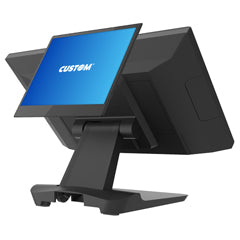

Choosing between a POS terminal and a tablet POS system affects checkout speed, hardware compatibility, reliability, counter layout, employee training, payments, barcode scanning, receipt printing, cash drawer setup, and long-term support. Tablet POS systems are popular for simple, mobile, and cloud-based checkout workflows, while traditional POS terminals are often better for fixed checkout lanes, retail counters, restaurant service stations, grocery-style lanes, liquor stores, convenience stores, and businesses that need a more durable hardware setup.
This guide compares POS terminal vs tablet POS systems for retail stores, restaurants, grocery stores, liquor stores, convenience stores, cafes, specialty retailers, and multi-location businesses. Spartan POS helps businesses compare POS hardware, receipt printers, barcode scanners, cash drawers, label printers, mobile computers, and complete checkout workflows.
Quick Answer
Choose a POS terminal when you need a fixed checkout station, stronger durability, more peripheral control, barcode scanning, receipt printing, cash drawer support, customer display options, and a professional checkout counter setup.
Choose a tablet POS system when you need mobile checkout, smaller counter footprint, app-based selling, line busting, table service, pop-up sales, or a lightweight cloud POS setup.
For many established retail, liquor, grocery, convenience, and restaurant environments, a dedicated POS terminal is usually the better long-term checkout station. For mobile selling, simple retail, tableside ordering, and smaller operations, a tablet POS can be a practical option when the software and hardware are compatible.
POS Terminal vs Tablet POS: Main Difference
| Comparison Point | POS Terminal | Tablet POS |
|---|---|---|
| Best Fit | Fixed checkout counters, high-use lanes, retail stores, restaurants, grocery, liquor, and convenience workflows | Mobile checkout, simple retail, pop-ups, cafes, tableside ordering, line busting, and lightweight POS workflows |
| Durability | Usually stronger for daily commercial checkout use | Depends on tablet model, stand, case, charger, and environment |
| Peripheral Support | Often better for receipt printers, barcode scanners, cash drawers, customer displays, scales, and multiple accessories | Can be more limited depending on app, operating system, Bluetooth, network, and approved hardware |
| Counter Setup | More permanent and professional checkout station | More compact and flexible setup |
| Mobility | Usually fixed in place | Better for mobile selling and staff movement |
| Best Buying Advice | Choose for reliable, full-featured checkout stations | Choose for portability, simple workflows, or tablet-first POS software |
What Is a POS Terminal?
A POS terminal is a dedicated checkout workstation or point-of-sale computer designed for commercial transaction environments. POS terminals may include a touchscreen, processor, operating system, ports, mounting options, and support for connected peripherals such as receipt printers, barcode scanners, cash drawers, payment terminals, customer displays, and scales.
POS terminals are commonly used in:
- Retail stores
- Liquor stores
- Grocery stores
- Convenience stores
- Restaurants and bars
- Pharmacies
- Specialty retail stores
- High-volume checkout counters
- Multi-lane point-of-sale environments
Businesses using a more complete retail management system, such as BizTracker Infinity POS, may prefer POS terminals because they support a more traditional checkout counter with receipt printing, barcode scanning, cash drawer control, inventory workflows, customer management, and reporting.
What Is a Tablet POS System?
A tablet POS system uses a tablet, such as an iPad or Android tablet, as the main POS screen. Tablet POS systems are often app-based or cloud-based and can be paired with supported card readers, printers, stands, scanners, cash drawers, and other accessories.
Tablet POS systems are commonly used for:
- Mobile checkout
- Line busting
- Tableside ordering
- Pop-up stores
- Farmers markets and events
- Small retail stores
- Cafes and quick-service restaurants
- Simple checkout counters with limited hardware needs
Tablet POS can be convenient, but buyers need to confirm the app supports the exact receipt printers, barcode scanners, cash drawers, and payment devices they plan to use.
POS Terminal vs Tablet POS by Use Case
| Use Case | Better Starting Point | Why |
|---|---|---|
| Fixed retail checkout counter | POS terminal | A dedicated terminal is usually better for receipt printing, barcode scanning, cash drawer control, and everyday cashier use. |
| Mobile checkout or line busting | Tablet POS | A tablet can move with staff and support flexible checkout when the app and payment workflow allow it. |
| Liquor store checkout | POS terminal | Liquor stores often need barcode scanning, cash drawer control, receipt printing, age-restricted workflows, and durable counter hardware. |
| Grocery or convenience checkout | POS terminal | These environments often need scanners, receipt printers, cash drawers, scales, customer displays, and durable hardware. |
| Restaurant tableside ordering | Tablet POS | Tablets can support mobile order entry, server movement, and line-side ordering. |
| Restaurant service counter or bar terminal | POS terminal | A fixed terminal is often better for heavy-use ordering, receipt printing, kitchen printing, and cash drawer workflows. |
| Pop-up shop or event sales | Tablet POS | Tablet POS is easier to transport and deploy for temporary selling environments. |
| Inventory-heavy retail | POS terminal | Inventory-heavy retail often benefits from stronger workstation hardware, barcode scanners, label printers, and local peripheral support. |
When to Choose a POS Terminal
A POS terminal is usually the better choice when the checkout station is used every day, employees need a reliable fixed workstation, and the business depends on multiple hardware devices. POS terminals are especially useful when checkout needs to feel permanent, durable, and business-ready.
Choose a POS terminal when you need:
- A fixed checkout lane or counter station
- Commercial-grade touchscreen hardware
- Receipt printer, cash drawer, and scanner support
- Customer display or pole display options
- More wired connection options
- Better support for multi-peripheral setups
- Durability for daily cashier use
- Compatibility with retail POS software such as BizTracker Infinity POS
- A more professional checkout appearance
When to Choose Tablet POS
A tablet POS system can be a good fit when the business wants mobility, flexibility, and a smaller checkout footprint. Tablet POS is especially useful for simple checkout environments, mobile ordering, pop-ups, small retail stores, cafes, and businesses that already use tablet-first POS software.
Choose tablet POS when you need:
- Mobile checkout
- Tableside ordering
- Line busting
- A compact counter setup
- Quick deployment for simple workflows
- App-based checkout
- Temporary event or pop-up selling
- Lightweight hardware with fewer peripherals
POS Terminal vs Tablet POS for Hardware Compatibility
Hardware compatibility is often the deciding factor. A tablet POS may look simple, but it can become frustrating if the app only supports certain printers, scanners, drawers, payment terminals, tablet stands, or operating system versions. A POS terminal may offer more peripheral flexibility, but it still needs compatible drivers, interfaces, software, and accessories.
| Hardware | POS Terminal Consideration | Tablet POS Consideration | Helpful Link |
|---|---|---|---|
| Receipt printers | Often supports USB, Ethernet, serial, or other fixed-station printer setups depending on software | May require Bluetooth, Ethernet, AirPrint, app-approved printer models, or specific operating system support | Receipt Printers |
| Barcode scanners | Good fit for USB, wireless, presentation, and rugged scanners depending on system | May need Bluetooth scanner support or app-approved scanning workflows | Barcode Scanners |
| Cash drawers | Often triggered through receipt printer, terminal, or compatible interface | Often depends on receipt printer connection, tablet app support, or approved hardware bundle | Cash Drawers |
| Label printers | Can be better for barcode label printing, shelf labels, and inventory labels when software supports it | May be limited depending on app, drivers, label format, and printer support | Label Printers |
| Mobile computers | Useful for inventory workflows connected to a retail management system | Tablet POS may not replace dedicated mobile inventory devices | Mobile Computers |
| Payment terminals | May support integrated pin pads or external payment terminals depending on POS software | Often tied to app-approved card readers or payment devices | POS Hardware |
POS Terminal vs Tablet POS for Retail Stores
Retail stores with steady checkout traffic often benefit from POS terminals because they provide a more durable and complete counter setup. A terminal can support a cashier-facing touchscreen, receipt printer, barcode scanner, cash drawer, customer display, and payment terminal in a more structured way.
Tablet POS can work well for smaller retail stores, mobile checkout, boutique counters, and stores that want a compact or portable setup. However, the tablet POS app must support the exact scanner, printer, drawer, payment terminal, and inventory features the store requires.
Retail businesses using BizTracker Infinity POS should generally plan around a proper POS terminal or workstation-style setup for stronger checkout, inventory, barcode printing, reporting, and customer management workflows.
POS Terminal vs Tablet POS for Restaurants
Restaurants may use both POS terminals and tablets. A fixed POS terminal can be better for a bar, host station, service counter, cashier station, kitchen-adjacent order station, or high-volume order entry point. A tablet POS can be better for tableside ordering, pay-at-table workflows, line busting, curbside pickup support, and outdoor service where the software supports it.
Restaurant hardware planning may include:
- Receipt printers for customer receipts
- Kitchen printers or order printers where supported
- Cash drawers for cash payments
- Tablet stands or terminal mounts
- Payment terminals
- Network hardware for reliable printing and order routing
For restaurant hardware planning, review Restaurant POS Hardware Guide, Restaurant Online Ordering Hardware Setup, and Best POS Printers for Restaurants.
POS Terminal vs Tablet POS for Inventory
Inventory-heavy businesses should be careful with tablet POS systems. Some tablet POS systems work well for simple item catalogs, but more advanced inventory workflows may require stronger database tools, barcode label printing, item imports, vendor management, receiving, reporting, and multi-store controls.
A POS terminal paired with a retail management system such as BizTracker Infinity POS may be a better fit when the business needs deeper inventory management, barcode label printing, customer records, reporting, and store operations beyond a lightweight checkout app.
| Inventory Need | Better Starting Point | Why |
|---|---|---|
| Simple product catalog | Tablet POS or POS terminal | Either may work if the software supports the item setup. |
| Large SKU catalog | POS terminal with stronger POS software | Large item files often need better imports, reporting, and database control. |
| Barcode label printing | POS terminal | Label printer support is often easier to manage from a fixed workstation. |
| Receiving and stockroom scanning | POS terminal plus scanners or mobile computers | Inventory workflows may need scanners, mobile computers, and stronger back-office tools. |
| Multi-store inventory | POS terminal plus multi-store retail management software | Multi-location workflows need more than simple tablet checkout. |
POS Terminal vs Tablet POS for Multi-Store Businesses
Multi-store businesses need more than a checkout screen. They need consistent item data, store-level reporting, inventory visibility, user permissions, payment workflows, hardware support, transfers, barcode label printing, and management tools.
Tablet POS systems can be attractive for multi-location visibility if the cloud platform supports the required features. However, a multi-store retail management system may be better when the business wants stronger store-level control, headquarters reporting, structured inventory workflows, and more hardware flexibility.
For multi-location retail, review BizTracker Infinity Multi-Store and BizTracker Infinity Technology.
POS Terminal Pros and Cons
| POS Terminal Pros | POS Terminal Cons |
|---|---|
| More durable for fixed checkout environments | Less portable than a tablet |
| Better fit for multi-peripheral setups | Usually requires more counter space |
| Professional checkout appearance | May require more planning during setup |
| Good for barcode scanners, printers, drawers, and customer displays | Not ideal for tableside ordering or mobile checkout by itself |
| Stronger fit for inventory-heavy and high-use environments | Hardware selection must match software and operating system requirements |
Tablet POS Pros and Cons
| Tablet POS Pros | Tablet POS Cons |
|---|---|
| Portable and compact | May be less durable than a commercial POS terminal |
| Good for mobile checkout and tableside ordering | Peripheral compatibility can be limited |
| Often easier to deploy for simple workflows | May depend heavily on Wi-Fi, Bluetooth, app support, and battery life |
| Useful for pop-ups, events, and small counters | May be weaker for complex inventory and barcode label workflows |
| Can reduce counter footprint | Stands, cases, chargers, printers, scanners, and drawers still need to be planned |
What to Confirm Before Choosing POS Terminal or Tablet POS
| Buying Factor | What to Confirm |
|---|---|
| POS software | Confirm whether the software is designed for terminals, tablets, or both. |
| Operating system | Confirm Windows, Android, iPadOS, macOS, or other system requirements. |
| Receipt printer support | Confirm printer model, connection type, driver, and app compatibility. |
| Barcode scanner support | Confirm USB, Bluetooth, wireless, presentation, or scanner app support. |
| Cash drawer triggering | Confirm whether the drawer opens through the printer, terminal, app, or another supported interface. |
| Payment devices | Confirm approved card readers, pin pads, payment terminals, EMV support, and processor requirements. |
| Network reliability | Confirm Wi-Fi, Ethernet, internet, and local network requirements for checkout and printing. |
| Durability | Confirm whether the device can handle daily cashier use, spills, movement, cleaning, and counter conditions. |
Hardware to Plan Before Buying
Whether you choose a POS terminal or tablet POS, plan the full checkout setup before ordering. Many POS hardware issues happen because the software, operating system, connection type, printer, scanner, drawer, and payment device were not confirmed together.
- POS hardware for terminals, stands, peripherals, and checkout accessories
- Receipt printers for customer receipts and order printing
- Receipt paper for compatible thermal and impact printers
- Barcode scanners for product lookup, checkout, inventory, and receiving
- Cash drawers for checkout stations
- Label printers for product labels, shelf labels, and barcode labels
- Barcode labels for inventory, products, bins, and retail labels
- Mobile computers for receiving, inventory, picking, and stockroom workflows
Where BizTracker Infinity Fits
BizTracker Infinity POS is a retail point-of-sale and management system for businesses that need more than a lightweight tablet checkout app. It is especially relevant for retailers that need inventory, barcode label printing, reporting, customer records, checkout tools, and store management features.
For businesses comparing POS terminals and tablet POS, BizTracker Infinity is usually a better fit for a proper POS terminal or workstation-style checkout environment. This gives retailers a stronger foundation for printers, barcode scanners, cash drawers, inventory tools, reporting, and business management.
| BizTracker Resource | Best For | Link |
|---|---|---|
| BizTracker Infinity POS | Retail POS, checkout, inventory, barcode label printing, customer management, and reporting | Learn about BizTracker Infinity POS |
| BizTracker Infinity Multi-Store | Multi-location retailers that need store-level data, shared management tools, and headquarters workflows | Learn about BizTracker Infinity Multi-Store |
| BizTracker Infinity Technology | Businesses evaluating the system technology, reporting, database tools, and multi-store architecture | View BizTracker Infinity Technology |
| BizTracker Support | Businesses that want help with training, implementation, support, and ongoing use | View BizTracker Support |
Common Buying Mistakes to Avoid
- Choosing a tablet POS only because it looks cheaper or simpler
- Choosing a POS terminal without confirming software compatibility
- Buying printers, scanners, drawers, or payment devices before confirming support
- Assuming every tablet POS supports barcode scanners and cash drawers
- Assuming every tablet can survive commercial checkout use without a proper stand or case
- Ignoring Wi-Fi, Bluetooth, Ethernet, and internet reliability
- Using tablet POS for inventory-heavy retail without confirming label printing and reporting tools
- Using a POS terminal when the workflow truly needs mobility
- Forgetting to plan receipt paper, barcode labels, cables, mounts, and accessories
- Not testing the full checkout workflow before going live
Compatibility Guidance
POS terminal and tablet POS compatibility depends on the POS software, operating system, hardware model, connection type, drivers, payment devices, printer support, scanner support, accessories, firmware, network setup, and configuration.
Compatibility depends on your POS software, operating system, connection type, drivers, accessories, and configuration. Confirm compatibility before ordering.
Before ordering POS hardware, confirm:
- POS software requirements
- Operating system support
- Receipt printer compatibility
- Barcode scanner compatibility
- Cash drawer compatibility
- Payment terminal or card reader support
- Label printer support if barcode or shelf labels are needed
- USB, Ethernet, Bluetooth, Wi-Fi, or serial connection requirements
- Counter space, mounting, cable routing, and power needs
- Support and warranty responsibilities
Recommended Buying Path
- Start with your workflow: fixed checkout, mobile checkout, tableside ordering, line busting, inventory-heavy retail, restaurant service, or pop-up selling.
- Confirm whether your POS software is designed for terminals, tablets, or both.
- List required hardware: receipt printer, barcode scanner, cash drawer, payment terminal, customer display, label printer, and scale if needed.
- Choose a POS terminal for permanent, durable, multi-peripheral checkout stations.
- Choose tablet POS for mobile, lightweight, compact, or app-first workflows.
- For retail management needs, review BizTracker Infinity POS and BizTracker Infinity Multi-Store.
- Confirm all software, hardware, operating system, driver, payment, and accessory requirements before ordering.
Related POS Software and Hardware Resources
- BizTracker Infinity POS
- BizTracker Infinity Multi-Store
- BizTracker Infinity Technology
- BizTracker Support
- POS Hardware
- Receipt Printers
- Receipt Paper
- Barcode Scanners
- Cash Drawers
- Label Printers
- Barcode Labels
- Mobile Computers
- Cloud POS vs Local POS
- POS Hardware Compatibility Guide
- POS Hardware Setup and Troubleshooting Center
- Contact a POS Hardware Expert
Why Work With Spartan POS?
Spartan POS helps businesses compare POS terminals, tablet POS hardware, receipt printers, barcode scanners, cash drawers, label printers, mobile computers, and related checkout accessories. Spartan POS supports the products it sells and helps customers confirm compatibility, connection types, accessories, software requirements, and real checkout workflows before ordering.
For businesses evaluating a more complete retail management system, BizTracker Infinity POS and BizTracker Infinity Multi-Store are important options to compare against lightweight tablet POS workflows.
- Why Trust Spartan POS
- Authorized POS Hardware Dealer Support
- POS Hardware Compatibility Guide
- POS Hardware Setup and Troubleshooting Center
- Contact a POS Hardware Expert
Frequently Asked Questions
What is the difference between a POS terminal and a tablet POS?
A POS terminal is a dedicated checkout workstation or commercial POS device, while tablet POS uses a tablet as the main checkout screen. POS terminals are usually better for fixed checkout counters and multi-peripheral setups, while tablet POS is better for mobile, compact, or app-based workflows.
Is a POS terminal better than tablet POS?
A POS terminal is often better for established retail, grocery, liquor, convenience, and restaurant checkout stations that need receipt printers, barcode scanners, cash drawers, customer displays, and durable hardware. Tablet POS can be better for mobile checkout, tableside ordering, pop-ups, and small counters.
Is tablet POS good for retail stores?
Tablet POS can be good for simple retail stores, boutiques, pop-ups, and mobile checkout workflows. Inventory-heavy stores should confirm barcode scanning, label printing, reporting, payment, and cash drawer support before choosing tablet POS.
Is a POS terminal better for restaurants?
A POS terminal is often better for fixed restaurant stations, bars, service counters, and high-use order entry points. Tablet POS can be better for tableside ordering, pay-at-table workflows, and line busting when the software supports those workflows.
Can tablet POS work with receipt printers and cash drawers?
Yes, but only when the POS app supports the exact receipt printer, cash drawer, connection type, operating system, and configuration. Confirm compatibility before ordering hardware.
Can a POS terminal work with barcode scanners and label printers?
Yes, many POS terminal setups support barcode scanners and label printers, but compatibility depends on the POS software, operating system, drivers, connection type, printer model, scanner model, and configuration.
Where does BizTracker Infinity POS fit?
BizTracker Infinity POS fits businesses that need a retail POS and management system with checkout, inventory, barcode label printing, reporting, customer management, and support for store operations. It is generally better suited to a POS terminal or workstation-style setup than a lightweight tablet-only checkout workflow.
Which is better for multi-store retail, POS terminal or tablet POS?
Multi-store retail depends more on the POS software than the screen type. However, businesses that need inventory control, reporting, barcode labels, hardware flexibility, and store-level management may prefer a POS terminal setup with a system such as BizTracker Infinity Multi-Store.
Can Spartan POS help choose POS hardware?
Yes. Spartan POS supports the products it sells and can help businesses compare POS terminals, receipt printers, barcode scanners, cash drawers, label printers, mobile computers, and accessories based on software compatibility, operating system, connection type, and workflow.
Bottom Line
A POS terminal is usually the better choice for fixed checkout counters, high-use retail lanes, liquor stores, grocery stores, convenience stores, restaurants, inventory-heavy stores, and businesses that need strong peripheral support. Tablet POS is usually the better choice for mobile checkout, tableside ordering, line busting, pop-ups, compact counters, and lightweight app-based selling.
Start by reviewing your software, workflow, hardware needs, and support requirements. For retail businesses that need a more complete POS and inventory management system, compare tablet POS options against BizTracker Infinity POS. For hardware planning, browse POS hardware, receipt printers, barcode scanners, cash drawers, label printers, and mobile computers, or visit Contact a POS Hardware Expert for help choosing the right setup.