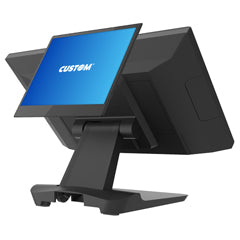

Retail product label printing workflows help stores create scannable product labels, price labels, shelf labels, barcode labels, SKU labels, hang tags, bin labels, and inventory labels that connect products to the POS system. For retail stores, boutiques, gift shops, liquor stores, convenience stores, grocery stores, specialty shops, hardware stores, consignment stores, and ecommerce sellers with a physical checkout counter, the right label workflow can make checkout faster, inventory cleaner, and product identification more reliable.
A strong retail product label workflow connects your product data, POS software, item SKUs, barcode values, label templates, label printers, barcode labels, thermal labels, thermal transfer ribbons, barcode scanners, and checkout hardware. The goal is simple: print labels that scan correctly at the register and match the right item, price, tax setting, and inventory record.
Spartan POS helps retailers choose label printing and scanning hardware for real store workflows, including product labeling, shelf labeling, price changes, receiving, inventory counts, checkout scanning, backroom organization, and multi-location retail operations.
Quick Answer: What Is a Retail Product Label Printing Workflow?
A retail product label printing workflow is the process of creating product data in a POS or inventory system, assigning a barcode or SKU, designing a label, printing it on the correct label media, applying it to the product or shelf, and scanning it at checkout or during inventory tasks. A good workflow makes sure every printed label matches the correct product record in the POS system.
This workflow is especially important for products that do not arrive with manufacturer barcodes, private-label goods, vendor items, consignment products, handmade products, bulk products, small accessories, repackaged items, and store-created SKUs.
Start with the full Label Printers collection, then match the printer with compatible barcode labels, thermal labels, thermal transfer ribbons, and barcode scanners.
Why Retail Stores Need Product Label Printing
Retail stores often carry products from many vendors. Some products already have UPC barcodes, while others arrive unlabeled, incorrectly labeled, or labeled in a way that does not match the store’s POS system. Retailers may also need their own labels for pricing, product variants, internal SKUs, markdowns, shelf organization, inventory counts, or backroom storage.
Retail product labels help connect the physical item to the digital item record. When the barcode scans correctly, the POS system can identify the product, price, tax setting, department, vendor, and inventory record without manual lookup.
- Faster checkout: Cashiers can scan product labels instead of searching by item name or typing SKUs.
- Cleaner inventory: Barcode labels help staff receive, count, transfer, and restock products more accurately.
- Better price control: Printed labels and shelf labels help keep pricing visible and consistent.
- Fewer manual-entry mistakes: Scanning reduces errors from mistyped item numbers or wrong product selections.
- Better product organization: Labels help identify variants, styles, sizes, colors, flavors, vendors, and categories.
- More professional presentation: Printed retail labels look cleaner than handwritten stickers or improvised tags.
- Improved staff training: New employees can scan labels instead of memorizing product codes.
Retail Product Label Workflow Steps
A retail label workflow should be repeatable and easy for staff to follow. The exact process depends on your POS software, label printer, label size, and inventory process, but most retailers follow the same basic steps.
- Create the product record: Add the item name, SKU, vendor, category, cost, price, tax setting, and inventory details in the POS system.
- Assign the barcode value: Use the manufacturer UPC, internal SKU, custom barcode, or item number supported by your POS software.
- Choose the label type: Decide whether the item needs a product label, price label, shelf label, hang tag, barcode label, or bin label.
- Select the label size: Make sure the label fits the product, package, shelf edge, or tag while leaving enough room for a scannable barcode.
- Print a test label: Check alignment, text size, barcode clarity, price display, and label placement.
- Scan the label: Test the barcode with the same barcode scanner used at the register.
- Confirm the POS result: Make sure the correct product, price, and tax setting appear when scanned.
- Print the full batch: Print labels only after the test label scans correctly.
- Apply labels consistently: Put labels where staff can scan them easily without covering important product information.
Hardware and Supplies Needed for Retail Label Printing
Retail product label printing usually requires more than a printer. The label printer, media, ribbon, scanner, POS system, and label software all need to work together.
| Hardware or Supply | Why It Matters | Shop Related Products |
|---|---|---|
| Label Printer | Prints product labels, price labels, SKU labels, shelf labels, barcode labels, and inventory labels. | Label Printers |
| Barcode Labels | Used for scannable product barcodes, retail item labels, SKU labels, and inventory labels. | Barcode Labels |
| Thermal Labels | Used for direct thermal label workflows where ribbon is not required. | Thermal Labels |
| Thermal Transfer Ribbons | Used with thermal transfer printers for durable retail labels, synthetic labels, and longer-lasting barcode labels. | Thermal Transfer Ribbons |
| Barcode Scanner | Reads the printed product label at checkout, receiving, inventory counts, and product lookup. | Barcode Scanners |
| 2D Barcode Scanner | Reads QR codes, Data Matrix, PDF417, and other 2D barcode formats when used in retail workflows. | 2D Barcode Scanners |
| Receipt Printer | Prints customer receipts after products are scanned and sold. | Receipt Printers |
| Cash Drawer | Supports cash checkout workflows when paired with compatible POS hardware and receipt printers. | Cash Drawers |
| POS Hardware | Connects product scanning, receipt printing, cash management, and checkout workflows. | POS Hardware |
Product Labels vs Price Labels vs Shelf Labels
Retail stores often need more than one type of label. A product label identifies the item itself. A price label shows the selling price. A shelf label organizes the shelf or display. A barcode label makes the item scannable. Some labels combine several of these functions.
| Label Type | Best For | What to Print |
|---|---|---|
| Product Label | Items without manufacturer barcodes, private-label products, handmade goods, vendor items, and repackaged products. | Product name, SKU, barcode, price, variant, vendor, or short description. |
| Price Label | Retail products that need visible pricing on the item or package. | Price, product name, SKU, barcode, department, or sale price. |
| Shelf Label | Shelves, bins, displays, planograms, grocery shelves, convenience aisles, and stockroom locations. | Product name, price, SKU, barcode, location, size, or unit information. |
| Barcode Label | Checkout scanning, inventory counts, receiving, returns, and stockroom workflows. | Barcode, human-readable SKU, item number, or product name. |
| Hang Tag | Apparel, gifts, accessories, boutique items, jewelry, handmade goods, and specialty retail. | Barcode, price, SKU, style, size, color, or vendor information. |
| Bin Label | Backroom bins, stockroom shelves, parts drawers, storage areas, and inventory locations. | Location code, bin name, barcode, item category, or department. |
Retail Label Workflow by Store Type
The best retail label workflow depends on what the store sells. Apparel shops need variant labels. Liquor stores need bottle and shelf labels. Gift shops may need small product labels. Convenience stores may need shelf and price labels. Grocery stores may need product, shelf, and food-related labels.
| Store Type | Common Label Workflow | Recommended Hardware to Review |
|---|---|---|
| Boutique or Apparel Store | Print hang tags, size labels, color labels, barcode labels, and price labels for apparel and accessories. | Label printers, barcode labels, barcode scanners |
| Gift Shop | Print small product labels, vendor labels, price labels, barcode labels, and shelf labels. | Label printers, thermal labels, POS hardware |
| Liquor Store | Print shelf labels, price labels, bottle labels, internal SKU labels, and barcode labels for products that do not scan. | Barcode scanners, label printers, receipt printers |
| Convenience Store | Print shelf labels, product labels, price labels, backroom labels, and inventory labels. | Label printers, barcode labels, cash drawers |
| Grocery Store | Print shelf labels, product labels, packaged goods labels, inventory labels, and department labels. | Label printers, 2D barcode scanners, POS hardware |
| Hardware or Parts Store | Print bin labels, shelf labels, product barcodes, parts labels, and inventory location labels. | Barcode labels, rugged scanners, mobile computers |
| Consignment Store | Print item labels tied to consignor, SKU, price, date, category, and product description. | Label printers, barcode scanners, receipt printers |
| Specialty Retail Store | Print barcode labels, price labels, shelf labels, vendor labels, and product variant labels. | Label printers, barcode labels, POS hardware |
Direct Thermal vs Thermal Transfer for Retail Labels
Retailers should choose label media based on how long the label needs to last and where it will be used. Direct thermal labels are common for short-term indoor labeling. Thermal transfer labels are often better when the label needs to last longer or resist handling, abrasion, sunlight, moisture, or chemicals.
| Print Method | Best Retail Use | Supplies Needed | What to Consider |
|---|---|---|---|
| Direct Thermal | Short-term product labels, price labels, shelf labels, shipping labels, and indoor labels. | Compatible direct thermal printer and thermal labels. | No ribbon required, but labels may fade with heat, sunlight, friction, or long storage. |
| Thermal Transfer | Durable product labels, long-term shelf labels, asset labels, synthetic labels, and labels handled frequently. | Compatible thermal transfer printer, label media, and thermal transfer ribbons. | Requires ribbon, but is often better for longer-lasting retail labels. |
For more detail, review Direct Thermal vs Thermal Transfer Labels and Direct Thermal vs Thermal Transfer Label Printers.
Choosing a Label Printer for Retail Products
The right label printer depends on print volume, label size, media type, software, barcode requirements, and where the printer will be used. Some retailers only need a compact desktop label printer. Others need a more advanced barcode label printer for product labels, shelf labels, and higher-volume inventory workflows.
| Printer Type | Best Retail Fit | When to Choose It |
|---|---|---|
| Compact Desktop Label Printer | Small stores, offices, light product labeling, file labels, address labels, and basic retail labels. | Choose when label volume is low and label sizes are simple. |
| Desktop Barcode Label Printer | Retail product labels, price labels, SKU labels, shelf labels, and daily barcode printing. | Choose when the store prints barcode labels regularly and needs reliable POS scanning. |
| Thermal Transfer Label Printer | Durable product labels, synthetic labels, shelf labels, asset labels, and labels that need to last longer. | Choose when label durability matters and ribbon-based printing is required. |
| Industrial Label Printer | High-volume retail operations, warehouses, distribution, multi-location product labeling, and backroom label production. | Choose when the business needs faster output, larger media capacity, and more demanding uptime. |
| Mobile Label Printer | On-demand shelf labels, stockroom labels, aisle labeling, receiving, and floor-level label printing. | Choose when staff need to print labels away from a desk or back-office workstation. |
Browse label printers to compare desktop, barcode, direct thermal, thermal transfer, mobile, and industrial label printing options.
What Should Be Printed on Retail Product Labels?
A retail product label should show the information that staff and customers need, while keeping the barcode large and clear enough to scan. Do not overcrowd small labels with too much text.
| Label Field | Why It Helps | Best For |
|---|---|---|
| Barcode | Allows the item to scan at checkout or during inventory tasks. | Product labels, SKU labels, inventory labels. |
| Product Name | Helps staff and customers identify the item without scanning. | Product labels, shelf labels, specialty items. |
| SKU or Item Number | Gives staff a readable item reference that matches the POS record. | Inventory, returns, receiving, vendor items. |
| Price | Shows the selling price clearly on the product or shelf. | Price labels, shelf labels, retail product labels. |
| Variant | Identifies size, color, style, flavor, model, or other item variations. | Apparel, gifts, accessories, specialty retail. |
| Vendor or Brand | Helps with receiving, inventory reporting, and product organization. | Multi-vendor retail, consignment, specialty stores. |
| Department or Category | Helps staff organize products and inventory by section. | Retail shelves, stockrooms, back-office labels. |
| Date or Batch | Supports receiving dates, markdown timing, batch tracking, or rotation. | Food, grocery, cosmetics, specialty products, inventory control. |
Barcode Scanner Role in Retail Product Labeling
A retail product label is only useful if it scans correctly. The barcode scanner is the test that proves the workflow works. Always test printed labels with the scanner used at the checkout counter before printing labels in bulk.
| Scanner Type | Best Retail Use | Related Link |
|---|---|---|
| Handheld Barcode Scanner | Checkout counters, service desks, stockrooms, receiving, and general retail scanning. | Barcode Scanners |
| 2D Barcode Scanner | QR codes, mobile coupons, customer IDs, loyalty codes, and 2D product barcodes. | 2D Barcode Scanners |
| Wireless Barcode Scanner | Scanning larger products, shelves, stockrooms, and items away from the counter. | Wireless Barcode Scanners |
| Rugged Barcode Scanner | Backroom, warehouse, receiving, and tougher retail inventory workflows. | Rugged Barcode Scanners |
| Mobile Computer | Inventory counts, receiving, stockroom scanning, price checks, and mobile retail workflows. | Mobile Computers |
For additional scanner planning, review 1D vs 2D Barcode Scanners and Mobile Computer vs Barcode Scanner.
Retail POS Data and Barcode Label Accuracy
The label must match the POS item record. If the product name, SKU, barcode value, price, tax setting, or inventory quantity is wrong in the POS system, the printed label will not fix the issue. A good workflow starts with clean product data before labels are printed.
| POS Data Field | Why It Matters |
|---|---|
| Item Name | Helps staff confirm the scanned product is correct. |
| SKU or Barcode | Must match the barcode printed on the label. |
| Price | Controls what the customer is charged at checkout. |
| Tax Setting | Helps ensure the correct sales tax behavior at checkout. |
| Variant | Distinguishes sizes, colors, flavors, styles, or package quantities. |
| Vendor | Supports purchasing, receiving, reporting, and product organization. |
| Inventory Quantity | Helps keep stock levels accurate after sales, receiving, and counts. |
| Department or Category | Supports reporting, shelf organization, and item lookup. |
Receiving Workflow for Retail Product Labels
One of the best times to print retail product labels is during receiving. When products arrive, staff can confirm the item record, print labels, test scan one label, and apply labels before the product reaches the sales floor.
- Receive the shipment or vendor order.
- Match items to existing POS product records or create new records.
- Confirm cost, retail price, SKU, vendor, and category.
- Assign or confirm barcode values.
- Print a small label batch for the received quantity.
- Scan a test label to confirm the correct item appears.
- Apply labels before items are stocked on the sales floor.
- Place labeled items in the correct shelf, bin, display, or backroom location.
For stockroom and receiving workflows, retailers may also review wireless barcode scanners, mobile computers, and rugged scanners.
Price Change and Markdown Label Workflow
Retailers frequently need to update prices, run promotions, mark down seasonal products, or correct shelf pricing. A label workflow should make price changes controlled and consistent.
| Price Label Workflow | Why It Helps |
|---|---|
| Update price in the POS first | Ensures the scanned price and printed label match. |
| Print new product or shelf labels | Helps customers and staff see the current price clearly. |
| Remove or cover old labels | Reduces pricing confusion at checkout. |
| Test scan a markdown item | Confirms the POS returns the correct sale price. |
| Use consistent label placement | Helps cashiers and customers find the price or barcode quickly. |
For label supplies, compare barcode labels, thermal labels, and thermal transfer ribbons.
Shelf Label Printing Workflow
Shelf labels help customers see product names, prices, sizes, and unit information. They also help staff restock, verify pricing, and scan shelf locations. In grocery, convenience, liquor, hardware, and specialty retail, shelf labels can be just as important as product labels.
| Shelf Label Field | Why It Helps |
|---|---|
| Product Name | Helps customers and staff identify the product location. |
| Price | Shows the current selling price clearly. |
| Unit Size | Useful for grocery, convenience, liquor, and packaged goods. |
| SKU or Item Number | Helps staff match shelf labels to POS records. |
| Barcode | Supports shelf scanning, price checks, inventory, and restocking workflows. |
| Location Code | Helps organize shelves, aisles, bins, and backroom areas. |
Retail Product Label Placement Tips
Even a perfectly printed label can cause problems if it is placed poorly. Labels should be easy for cashiers and staff to scan, while also staying clear of important product information, safety warnings, ingredients, size information, or branded packaging when possible.
- Place labels on a flat area when possible.
- Avoid wrapping the barcode around curved surfaces when the scanner may struggle to read it.
- Do not place labels over ingredients, warnings, lot numbers, expiration dates, or required product information.
- Keep barcodes away from seams, edges, folds, and glossy glare when possible.
- Use a label size large enough for the barcode to scan reliably.
- Apply labels consistently across similar product types.
- Test scan the label after applying it to the actual product surface.
Common Retail Product Label Mistakes to Avoid
Retail label problems usually come from mismatched data, wrong media, poor barcode size, or skipped testing. Avoid these common mistakes:
- Printing labels before cleaning up POS data: Incorrect item names, prices, tax settings, and SKUs create checkout problems.
- Using labels that are too small: Small labels may not leave enough space for a readable barcode.
- Not testing with the actual scanner: Always test labels with the register scanner before printing in bulk.
- Choosing the wrong adhesive: Some labels may fall off, damage packaging, or fail on curved or textured surfaces.
- Using direct thermal labels for long-term needs: Direct thermal labels may fade depending on heat, sunlight, friction, and storage conditions.
- Ignoring ribbon requirements: Thermal transfer printers need the correct ribbon for the label material.
- Covering important product information: Avoid placing labels over warnings, ingredients, dates, or manufacturer information.
- Forgetting shelf labels: Product labels help checkout, but shelf labels help customers and staff find items.
- Printing in bulk before testing: Always print and scan a test label first.
- Buying a printer based only on price: Printer class, label size, media support, software support, and daily volume matter.
How to Test a Retail Product Label
Testing labels before a full print run saves time and reduces wasted supplies. Use the actual product, printer, label media, POS system, and scanner whenever possible.
- Print one label from the POS or label software.
- Check that the product name, price, SKU, and barcode are correct.
- Apply the label to the actual product or package.
- Scan the label with the checkout scanner.
- Confirm the correct item appears in the POS system.
- Confirm the correct price and tax setting appear.
- Check that the label does not cover important product information.
- Confirm the label sticks properly and can be scanned from a normal cashier angle.
- Print a small batch before printing the full quantity.
Retail Label Printing Setup Checklist
Use this checklist before buying retail label printing hardware:
- What types of labels do you need: product labels, price labels, shelf labels, barcode labels, hang tags, or bin labels?
- Does your POS system support barcode label printing?
- Will labels print from the POS, label software, inventory software, or a spreadsheet?
- What barcode value will be printed: UPC, SKU, internal item number, or custom barcode?
- What label size fits your product or shelf?
- Will the label need to show price, product name, SKU, variant, or vendor?
- Should the label be direct thermal or thermal transfer?
- Do you need paper labels, synthetic labels, removable labels, permanent labels, or specialty adhesive?
- Does the printer support the label width, roll size, core size, and media type?
- Will the scanner read the printed barcode reliably?
- Will staff print labels one at a time, by product, by receiving batch, or by price change?
- Do you need a mobile computer or wireless scanner for receiving and inventory counts?
- Who supports the POS software, printer driver, label template, scanner, and media selection?
Compatibility Guidance
Retail product label printing depends on the POS software, item data, barcode format, label printer, label media, ribbon, operating system, printer driver, scanner, connection type, and workflow configuration. A label printer that works well for one retail environment may not be the right fit for another store’s label size, print volume, barcode format, or media requirements.
Compatibility depends on your POS software, operating system, connection type, drivers, accessories, and configuration. Confirm compatibility before ordering.
Before ordering, compare label printers, barcode labels, thermal labels, thermal transfer ribbons, barcode scanners, 2D barcode scanners, and mobile computers. For help planning the full retail setup, visit Contact a POS Hardware Expert.
Related Retail Labeling and POS Resources
Use these related categories and guides to build a complete retail product label printing, scanning, checkout, and inventory workflow:
- Label Printers
- Barcode Labels
- Thermal Labels
- Thermal Transfer Ribbons
- Barcode Scanners
- 2D Barcode Scanners
- Wireless Barcode Scanners
- Mobile Computers
- Receipt Printers
- Cash Drawers
- POS Hardware
- Barcode Label Printing Workflow for Small Business
- Direct Thermal vs Thermal Transfer Labels
- Direct Thermal vs Thermal Transfer Label Printers
- 1D vs 2D Barcode Scanners
- Mobile Computer vs Barcode Scanner
- POS Hardware Compatibility Guide
- POS Hardware Setup and Troubleshooting
- Contact a POS Hardware Expert
Why Buy Retail Label Printing Hardware from Spartan POS?
Spartan POS helps retailers choose label printing hardware for real store workflows, including product labels, barcode labels, shelf labels, price labels, inventory labels, receiving labels, and checkout scanning. Instead of choosing a label printer by price alone, Spartan POS helps customers think through the complete setup: POS software, label printer, media, ribbon, barcode scanner, label format, connection type, and daily staff workflow.
Spartan POS is an authorized dealer for many of the POS hardware brands it sells and supports the products it sells. Whether you are comparing label printers, barcode labels, barcode scanners, or complete POS hardware, Spartan POS can help review the hardware questions that matter before you order.
For help building a retail product label printing workflow, visit Contact a POS Hardware Expert.
Frequently Asked Questions
What is a retail product label printing workflow?
A retail product label printing workflow is the process of creating product data, assigning a barcode or SKU, printing a label, applying it to the product or shelf, and scanning it through the POS or inventory system.
What do retail stores need to print product labels?
Most retail stores need a label printer, compatible label media, POS or label design software, clean product data, a barcode value, and a barcode scanner that can read the printed label.
Can I print barcode labels from my POS system?
Many POS systems support barcode label printing, but capabilities vary. Confirm your POS supports the printer model, label size, barcode format, item fields, price fields, and batch printing workflow you need.
What should be on a retail product label?
Common fields include barcode, product name, SKU, price, variant, vendor, category, and short description. The label should stay readable and leave enough space for the barcode to scan correctly.
What is the difference between product labels and shelf labels?
Product labels are applied directly to the item or package. Shelf labels are placed on the shelf, bin, or display to show product name, price, SKU, barcode, or location information.
Should retail labels be direct thermal or thermal transfer?
Direct thermal labels can work for short-term indoor labels. Thermal transfer labels are often better for longer-lasting product labels, shelf labels, synthetic labels, and labels that need more durability.
Why won’t my retail barcode label scan?
Common reasons include barcode size, poor print quality, wrong barcode type, missing quiet zone, low contrast, scanner settings, label glare, curved surfaces, or barcode data that does not match the POS item record.
Do I need a barcode scanner with a label printer?
Yes, if the labels are meant to scan at checkout, receiving, inventory counts, or product lookup. Always test labels with the scanner your staff will use.
Can I use product labels for inventory counts?
Yes. Product barcode labels can support inventory counts when the barcode matches the POS or inventory record. Larger stores may also use wireless scanners or mobile computers for inventory workflows.
What label printer is best for retail product labels?
The best label printer depends on your label size, print volume, media type, software, barcode format, connection type, and whether you need direct thermal, thermal transfer, desktop, mobile, or industrial printing.
Can Spartan POS help choose retail label printing hardware?
Yes. Spartan POS can help review label printers, barcode labels, thermal labels, ribbons, barcode scanners, receipt printers, cash drawers, and related POS hardware for retail product labeling and checkout workflows.
Bottom Line
Retail product label printing helps stores create scannable product labels, shelf labels, price labels, SKU labels, hang tags, and inventory labels that connect physical products to the POS system. The right workflow improves checkout speed, inventory accuracy, receiving, price changes, and product organization.
Start by reviewing label printers, barcode labels, thermal labels, thermal transfer ribbons, and barcode scanners. Then confirm your POS software, barcode format, label size, printer connection, scanner, and staff workflow before printing labels in bulk.
Before ordering, print one test label, scan it at the register, confirm the correct item appears in the POS system, and verify the label fits the product or shelf location.