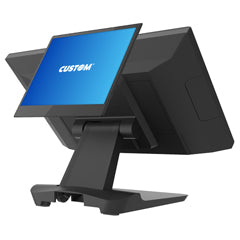

Choosing between a POS system and a cash register affects checkout speed, inventory control, reporting, payment processing, barcode scanning, receipt printing, cash management, customer records, employee permissions, and how much visibility a business has into daily operations. A cash register can handle basic sales and cash storage, but a modern POS system can help manage the business behind the transaction.
This guide compares POS systems vs cash registers for retail stores, restaurants, grocery stores, liquor stores, convenience stores, specialty retailers, cafes, and multi-location businesses. Spartan POS helps businesses compare POS hardware, cash drawers, receipt printers, barcode scanners, label printers, mobile computers, and checkout hardware that works with real business workflows.
Quick Answer
Choose a cash register if your business only needs a simple way to ring up basic sales, store cash, print simple receipts, and track limited totals.
Choose a POS system if your business needs inventory management, barcode scanning, product lookup, customer history, employee permissions, reporting, payment integration, receipt printing, cash drawer control, label printing, multi-store tools, or better insight into daily sales.
For most growing retail, restaurant, liquor, grocery, convenience, and specialty store operations, a POS system is the better long-term choice. A cash register may be enough for very small or simple businesses, but it usually cannot replace the inventory, reporting, and management tools of a full POS system.
POS System vs Cash Register: Main Difference
| Comparison Point | POS System | Cash Register |
|---|---|---|
| Main Purpose | Manages checkout, inventory, reporting, payments, customers, employees, and store operations | Rings up sales, stores cash, and prints basic receipts |
| Best For | Retail stores, restaurants, multi-store businesses, inventory-heavy stores, and businesses that want reporting and control | Very simple checkout environments with limited products, limited reporting needs, and basic cash handling |
| Inventory | Can track products, SKUs, quantities, vendors, departments, categories, and barcode labels depending on software | Usually limited or not designed for detailed inventory management |
| Barcode Scanning | Often supports barcode scanners for product lookup, checkout, inventory, and receiving | May have limited scanner support depending on model |
| Reporting | Can provide sales, item, department, clerk, customer, inventory, and multi-store reports depending on system | Usually limited to basic sales totals, departments, or register reports |
| Payments | Can integrate with payment terminals, EMV, receipts, cash drawers, and reporting workflows depending on system | May be separate from card processing or limited to basic payment workflows |
| Cash Management | Uses a connected cash drawer with cashier permissions, transaction tracking, and register reports | Cash drawer is built into or connected to the register |
| Growth | Better for expanding inventory, adding locations, improving reporting, and connecting more hardware | Better for basic transactions, not long-term operational management |
What Is a Cash Register?
A cash register is a checkout device used to ring up transactions, calculate totals, store cash, and print receipts. Traditional cash registers are simple and familiar. They can work for small businesses with basic checkout needs and limited inventory requirements.
A cash register may be enough for:
- Very small stores with simple pricing
- Low-volume cash sales
- Businesses that do not need detailed inventory
- Simple receipt printing
- Basic department-level sales tracking
- Temporary or very simple checkout setups
The limitation is that a cash register usually does not provide the same inventory control, barcode label printing, customer management, employee permissions, integrated reporting, or multi-store tools as a POS system.
What Is a POS System?
A POS system is a point-of-sale system that combines software, hardware, checkout tools, payment workflows, reporting, and business management features. A POS system can include a POS terminal, touchscreen, receipt printer, barcode scanner, cash drawer, payment terminal, label printer, customer display, and inventory tools.
A POS system may be the better choice for businesses that need:
- Product lookup and barcode scanning
- Inventory tracking
- Customer management
- Employee permissions and clerk tracking
- Sales reporting
- Receipt printing
- Payment processing integration
- Cash drawer control
- Barcode label printing
- Multi-store management
- Better visibility into business performance
Businesses that need more than basic checkout should compare complete POS platforms such as BizTracker Infinity POS, especially when inventory, barcode labels, reporting, customer records, and retail management are important.
Where BizTracker Infinity Fits
BizTracker Infinity POS is a retail point-of-sale and business management system built for stores that need more than a basic cash register. It is designed for retail operations that need checkout, inventory, barcode label printing, customer management, reporting, payment workflows, employee controls, and operational visibility.
For businesses comparing a POS system vs a cash register, BizTracker Infinity is most relevant when the business has grown beyond basic sales entry and needs a system that can help manage the store. Instead of using a cash register only to record transactions, BizTracker Infinity can support a more complete retail workflow.
| BizTracker Resource | Best For | Link |
|---|---|---|
| BizTracker Infinity POS | Retail checkout, inventory, barcode printing, customer management, reporting, and store operations | Learn About BizTracker Infinity POS |
| BizTracker Infinity Multi-Store | Retailers with multiple locations, headquarters workflows, shared data, store-level reporting, and multi-store inventory needs | Learn About BizTracker Infinity Multi-Store |
| BizTracker Infinity Technology | Businesses evaluating the technology, reporting, database, and system architecture behind BizTracker Infinity | View BizTracker Infinity Technology |
| BizTracker Support | Businesses that want help with support, implementation, training, and ongoing system use | View BizTracker Support |
POS System vs Cash Register by Business Type
| Business Type | Cash Register May Be Enough When | POS System Is Better When |
|---|---|---|
| Small retail store | The store has very few items and only needs basic checkout | The store needs inventory, barcode scanning, labels, customer records, and reporting |
| Liquor store | The store is extremely simple and does not need detailed product management | The store needs barcode scanning, item lookup, inventory, cashier controls, payment workflows, and detailed reporting |
| Grocery or convenience store | The business has limited items and simple cash sales | The business needs scanners, receipt printers, cash drawers, customer displays, scale workflows, inventory, and reporting |
| Restaurant or cafe | The business only needs very basic cash sales | The business needs order entry, receipt printing, kitchen printing, payment workflows, cash drawer control, and reporting |
| Specialty retail store | The store has a small catalog and does not need advanced tracking | The store needs product attributes, barcodes, labels, customer records, sales reports, and inventory visibility |
| Multi-store business | A cash register is rarely the best fit for multi-store operations | A POS system is usually needed for store-level reporting, inventory visibility, permissions, and management control |
When a Cash Register Is the Better Choice
A cash register can still make sense when the business is very simple. Some owners do not need inventory, customer management, detailed reporting, barcode labels, or multi-store tools. In those cases, a basic cash register may be enough.
A cash register may be a good fit if:
- You only need to ring up basic sales
- You do not track detailed inventory
- You do not need barcode scanning
- You do not need customer records
- You do not need detailed sales reports
- You have one very simple checkout station
- You mainly accept cash or use a separate payment device
- Your business is not planning to grow into more complex operations
When a POS System Is the Better Choice
A POS system is usually the better choice when a business needs more than a cash drawer and receipt. A POS system can connect checkout to inventory, reporting, customer management, barcode scanning, employee permissions, payments, and business operations.
A POS system is usually better if you need:
- Barcode scanning at checkout
- Inventory tracking
- Product lookup by SKU, UPC, category, department, or vendor
- Customer accounts or purchase history
- Sales reports by item, department, date, clerk, location, or customer
- Receipt printer and cash drawer integration
- Employee permissions and register accountability
- Payment terminal integration
- Barcode label printing
- Multi-store management
- Better control over daily business operations
Retailers that need these tools should review BizTracker Infinity POS as a full POS and retail management option instead of relying on a basic cash register.
Cash Drawer vs Cash Register: Where the Cash Drawer Fits
A cash drawer is not the same thing as a cash register. A cash drawer is the secure cash storage component used in a checkout setup. It may connect to a receipt printer, POS terminal, cash register, or supported POS hardware interface.
In a modern POS setup, a cash drawer is usually only one part of the checkout station. A complete POS station may include:
- POS terminal or POS hardware
- Receipt printer
- Cash drawer
- Barcode scanner
- Payment terminal or card reader
- Customer display where supported
- Label printer for barcode or shelf labels
Businesses comparing cash drawers should focus on drawer size, interface, till layout, printer compatibility, mounting needs, durability, and how the drawer opens from the POS system. Browse cash drawers for POS checkout stations and register setups.
POS System vs Cash Register for Inventory Management
Inventory management is one of the biggest reasons to upgrade from a cash register to a POS system. A cash register may record that a sale happened, but a POS system can help connect that sale to item-level inventory, product history, vendor information, reorder planning, barcode labels, and reporting.
| Inventory Need | Cash Register | POS System |
|---|---|---|
| Basic department totals | May support limited department totals | Can support department, category, item, SKU, vendor, and customer reporting depending on software |
| Item-level inventory | Usually limited or unavailable | Can track items, quantities, SKUs, costs, prices, and sales history |
| Barcode labels | Usually not a strong fit | Can support barcode label printing when software and hardware are compatible |
| Receiving | Usually manual or separate | Can support receiving workflows depending on POS software |
| Multi-store inventory | Not a good fit | Can support multi-store inventory with the right software, such as BizTracker Infinity Multi-Store |
POS System vs Cash Register for Barcode Scanning
Barcode scanning is another major difference. A cash register may support limited scanning depending on model, but a POS system is usually better for barcode-driven checkout, product lookup, inventory, receiving, and label workflows.
Businesses that rely on barcode scanning should compare:
- Barcode scanners for checkout and inventory
- 2D barcode scanners for QR codes, Data Matrix, and modern barcode workflows
- Wireless barcode scanners for stockrooms and receiving
- Mobile computers for inventory, receiving, and warehouse workflows
- Label printers for barcode label creation
- Barcode labels for product, shelf, bin, and inventory labels
POS System vs Cash Register for Reporting
A cash register may show daily totals, department totals, and basic transaction information. A POS system can provide much deeper reporting depending on software. This is especially important for owners who want to understand what is selling, when sales happen, who sold what, which products are profitable, and how inventory is moving.
A POS system may help report on:
- Sales by item
- Sales by department or category
- Sales by employee
- Sales by customer
- Gross margin and product performance
- Inventory movement
- Register totals
- Payment types
- Discounts, returns, voids, and exceptions
- Multi-store performance
Businesses that need more reporting depth should compare cash registers against retail management systems like BizTracker Infinity POS and review BizTracker Infinity Technology.
POS System vs Cash Register for Payments
Payment processing is another reason businesses move from a cash register to a POS system. A cash register may work separately from a payment terminal, which can create duplicate entry, reporting gaps, and more manual reconciliation. A POS system may support integrated or semi-integrated payments depending on software, hardware, processor, and configuration.
Before choosing either option, confirm:
- Supported payment processors
- Approved payment terminals
- EMV chip card workflow
- Debit, credit, gift card, and store credit options
- Receipt printer integration
- Cash drawer behavior
- PCI compliance responsibilities
- Support responsibilities for payment troubleshooting
For BizTracker payment-related information, review BizTracker PCI Compliance and BizTracker EMV Chip Credit Cards.
POS System vs Cash Register for Multi-Store Businesses
Cash registers are usually not the best choice for multi-store management. A business with multiple locations needs shared reporting, inventory visibility, store-level controls, user permissions, pricing tools, customer data, and management reporting.
A POS system is usually the better choice for multi-store operations because it can support structured store management. For retailers with multiple locations, BizTracker Infinity Multi-Store is an important option to review.
Multi-store businesses should compare:
- Store-level sales reporting
- Item and price management
- Inventory by location
- Transfers between stores
- Clerk and manager permissions
- Customer records
- Central office reporting
- Backup and support workflows
POS System vs Cash Register for Restaurants
Restaurants, bars, cafes, breweries, and quick-service locations may outgrow basic cash registers quickly. A restaurant may need order entry, kitchen printing, modifiers, receipt printing, cash drawer control, employee permissions, payment workflows, online ordering, pickup workflows, and reporting.
A cash register may work for a very simple cash-only counter, but most foodservice environments benefit from a POS system designed around restaurant workflows and compatible hardware.
For restaurant hardware planning, review:
- Restaurant POS Hardware Guide
- Restaurant Online Ordering Hardware Setup
- Best POS Printers for Restaurants
- Receipt Printers
- Cash Drawers
Hardware Needed for a Modern POS System
A modern POS system is usually built from several hardware components. The exact setup depends on the software, store type, checkout workflow, payment processor, and operating system.
| POS Hardware | Purpose | Shop |
|---|---|---|
| POS terminal or checkout hardware | Runs the POS software and serves as the main checkout workstation | POS Hardware |
| Receipt printer | Prints customer receipts, order tickets, and transaction records | Receipt Printers |
| Cash drawer | Stores cash, coins, checks, and till inserts during checkout | Cash Drawers |
| Barcode scanner | Scans product barcodes for checkout, inventory, receiving, and lookup | Barcode Scanners |
| Label printer | Prints barcode labels, shelf labels, product labels, and inventory labels | Label Printers |
| Mobile computer | Supports inventory, receiving, stock counts, and warehouse workflows | Mobile Computers |
Cash Register Pros and Cons
| Cash Register Pros | Cash Register Cons |
|---|---|
| Simple to understand | Limited inventory management |
| May be enough for very basic sales | Limited reporting |
| Can store cash and print basic receipts | Limited barcode scanning and product lookup |
| Lower complexity | Often separate from payment processing and business management tools |
| May work for very small operations | Usually not ideal for growing retail, restaurants, or multi-store businesses |
POS System Pros and Cons
| POS System Pros | POS System Cons |
|---|---|
| Supports checkout, inventory, reporting, and store operations | Requires more planning than a basic cash register |
| Can connect receipt printers, barcode scanners, cash drawers, and label printers | Hardware and software compatibility must be confirmed |
| Better for item-level sales and inventory visibility | Setup, training, and support matter more |
| Can support customer records, employee permissions, and reports | May require software licensing, payment setup, and configuration |
| Better for businesses that plan to grow | Not every POS system fits every industry or workflow |
Common Buying Mistakes to Avoid
- Buying a cash register when the business really needs inventory management
- Choosing a POS system without confirming hardware compatibility
- Buying a cash drawer before confirming how it will open
- Assuming every receipt printer works with every POS system
- Ignoring barcode scanning and label printing needs
- Choosing based only on upfront hardware cost
- Forgetting employee permissions, voids, returns, discounts, and register accountability
- Not planning payment terminal compatibility
- Ignoring multi-store needs until the business expands
- Not testing the full checkout workflow before going live
Compatibility Guidance
POS system and cash register compatibility depends on the software, operating system, receipt printer, cash drawer, barcode scanner, payment terminal, label printer, drivers, cables, accessories, and configuration.
Compatibility depends on your POS software, operating system, connection type, drivers, accessories, and configuration. Confirm compatibility before ordering.
Before choosing a POS system, cash register, or checkout hardware, confirm:
- Receipt printer compatibility
- Cash drawer connection and triggering method
- Barcode scanner compatibility
- Payment terminal support
- Operating system requirements
- Inventory and reporting needs
- Label printer support if barcode labels are needed
- Network and internet requirements
- Multi-store requirements
- Support and training responsibilities
Recommended Buying Path
- Decide whether your business only needs basic transaction entry or needs full store management.
- List the workflows you need: inventory, barcode scanning, labels, payments, reports, customer records, employee permissions, and multi-store tools.
- If your needs are basic, compare cash registers and simple checkout hardware.
- If your needs include inventory, reporting, barcode labels, or business management, compare POS systems such as BizTracker Infinity POS.
- Plan required hardware: receipt printers, cash drawers, barcode scanners, payment terminals, and label printers.
- For multiple locations, review BizTracker Infinity Multi-Store.
- Confirm compatibility before ordering hardware or replacing your current checkout setup.
Related POS Software and Hardware Resources
- BizTracker Infinity POS
- BizTracker Infinity Multi-Store
- BizTracker Infinity Technology
- BizTracker Support
- BizTracker PCI Compliance
- BizTracker EMV Chip Credit Cards
- POS Hardware
- Cash Drawers
- Receipt Printers
- Receipt Paper
- Barcode Scanners
- Label Printers
- Barcode Labels
- Mobile Computers
- Cloud POS vs Local POS
- POS Terminal vs Tablet POS
- POS Hardware Compatibility Guide
- POS Hardware Setup and Troubleshooting Center
- Contact a POS Hardware Expert
Why Work With Spartan POS?
Spartan POS helps businesses compare POS systems, cash drawers, receipt printers, barcode scanners, label printers, mobile computers, and checkout hardware for real retail, restaurant, grocery, liquor, convenience, and multi-store workflows. Spartan POS supports the products it sells and helps customers confirm compatibility, connection types, accessories, software requirements, and checkout setup before ordering.
For businesses deciding whether to move beyond a cash register, BizTracker Infinity POS is an important option to review. It can support retail checkout, inventory, barcode label printing, customer records, reporting, and business management workflows that a basic cash register cannot provide.
- Why Trust Spartan POS
- Authorized POS Hardware Dealer Support
- POS Hardware Compatibility Guide
- POS Hardware Setup and Troubleshooting Center
- Contact a POS Hardware Expert
Frequently Asked Questions
What is the difference between a POS system and a cash register?
A cash register is mainly used to ring up sales, store cash, and print basic receipts. A POS system can manage checkout, inventory, barcode scanning, reporting, customer records, payments, employee permissions, cash drawers, receipt printers, label printers, and business operations.
Is a POS system better than a cash register?
A POS system is usually better for businesses that need inventory, reporting, barcode scanning, payment integration, customer records, employee controls, and growth tools. A cash register may be enough for very simple businesses with basic checkout needs.
Do I need a cash drawer if I have a POS system?
If your business accepts cash, you will usually need a compatible cash drawer. The cash drawer is the secure cash storage component used with the POS system, receipt printer, or checkout station.
Is a cash drawer the same as a cash register?
No. A cash drawer stores cash. A cash register is a checkout device that rings up sales and stores cash. A POS system may use a separate cash drawer as part of a complete checkout setup.
Can a cash register track inventory?
Some cash registers may offer limited department or item tracking, but they usually do not provide the same inventory management, barcode label printing, reporting, and multi-store tools as a POS system.
When should I upgrade from a cash register to a POS system?
Upgrade when you need item-level inventory, barcode scanning, better reporting, payment integration, employee permissions, customer records, label printing, or multi-store management.
Where does BizTracker Infinity POS fit?
BizTracker Infinity POS fits businesses that need a retail POS and management system with checkout, inventory, barcode label printing, reporting, customer management, and support for store operations.
Can BizTracker support multiple stores?
Yes. BizTracker Infinity Multi-Store is designed for retailers that need multi-store workflows, headquarters data access, shared management tools, store-level reporting, and broader retail controls.
What hardware do I need for a POS system?
A POS system may require a POS terminal, receipt printer, cash drawer, barcode scanner, payment terminal, label printer, customer display, receipt paper, barcode labels, and other accessories depending on the software and workflow.
Can Spartan POS help choose POS hardware?
Yes. Spartan POS supports the products it sells and can help businesses compare POS hardware, receipt printers, cash drawers, barcode scanners, label printers, mobile computers, and accessories based on software compatibility, operating system, connection type, and workflow.
Bottom Line
A cash register can work for very simple checkout, but a POS system is usually the better long-term choice for businesses that need inventory, barcode scanning, receipt printing, cash drawer control, payment integration, reporting, customer records, employee permissions, and growth tools.
If your business only needs basic transaction entry, a cash register may be enough. If your business needs to manage the store, compare POS systems such as BizTracker Infinity POS. For hardware planning, browse POS hardware, cash drawers, receipt printers, barcode scanners, label printers, and mobile computers, or visit Contact a POS Hardware Expert for help choosing the right checkout setup.